Standing beneath an 8,000-metre mountain is a completely different experience from seeing one in photographs. At Nanga Parbat Base Camp in Pakistan, the mountain doesn’t appear somewhere far away on the horizon. It rises directly in front of you — an enormous wall of rock, snow, glaciers and ice dominating almost everything you can see.
At 8,126 metres (26,660 feet), Nanga Parbat is the ninth-highest mountain in the world and one of Pakistan’s most legendary peaks. For international travelers who want to experience Pakistan’s high mountains without attempting a technical expedition, the trek from Fairy Meadows to Nanga Parbat Base Camp is one of the country’s most rewarding adventures.
The good news?
You don’t need to be a professional mountaineer to reach it.
The standard tourist route involves an adventurous jeep journey, a hike to Fairy Meadows and then a spectacular trek through alpine forest and mountain terrain toward the base of Nanga Parbat. This Nanga Parbat Base Camp complete guide explains how to get there, what the trek is really like, the best time to visit, how difficult it is, what to pack and what foreign travelers should know before making the journey.
Where Is Nanga Parbat Base Camp?
Nanga Parbat is located in Gilgit-Baltistan in northern Pakistan, close to the Indus River and the Karakoram Highway.The mountain reaches 8,126 metres, making it the world’s ninth-highest peak. Fairy Meadows, the main tourist gateway to its Raikot Face, lies at approximately 3,300 metres above sea level in Diamer District.One important thing to understand is that Nanga Parbat is enormous.There are different approaches to different sides of the mountain, including the Raikot, Diamir and Rupal faces.For most travelers, however, the phrase “Nanga Parbat Base Camp trek” refers to the route beginning at Fairy Meadows and approaching the mountain from the Raikot side.
That is the route covered in this guide.
Why Visit Nanga Parbat Base Camp?
Pakistan contains five mountains higher than 8,000 metres, but reaching the surroundings of many of them requires long expeditions into extremely remote terrain.
Nanga Parbat is different.
The Fairy Meadows route allows ordinary hikers to experience the landscape beneath an eight-thousander without undertaking a technical climbing expedition.
The journey combines almost everything that makes northern Pakistan special:
- Pine forests,
- Alpine meadows,
- Glaciers,
- Remote mountain settlements,
- Dramatic hiking trails,
- and enormous Himalayan scenery.
You also get to stay at Fairy Meadows, which is already one of Pakistan’s most beautiful destinations.
For adventure travelers, photographers and hikers visiting Pakistan, combining Fairy Meadows with Nanga Parbat Base Camp makes much more sense than visiting the meadow alone.
How to Reach Nanga Parbat Base Camp
You cannot reach Nanga Parbat Base Camp directly by road.
The journey happens in several stages:
Islamabad or Gilgit → Raikot Bridge → Tattu Village → Fairy Meadows → Beyal Camp → Nanga Parbat Base Camp
Let’s break it down.
Step 1: Reach Raikot Bridge
Your mountain journey begins at Raikot Bridge on the Karakoram Highway.
Travelers commonly reach Raikot from:
-
- Islamabad
-
- Chilas
-
- Gilgit
-
- Hunza
If you are traveling overland from Islamabad toward Gilgit-Baltistan, Raikot can be incorporated into your northern Pakistan itinerary.
If you are already exploring Gilgit or Hunza, you can travel south toward Raikot Bridge before beginning the Fairy Meadows journey.
Mountain roads in northern Pakistan can occasionally be affected by landslides, construction or severe weather, so leaving some flexibility in your itinerary is wise.
Step 2: Take the Jeep From Raikot Bridge to Tattu Village
This is one of the most memorable parts of the entire journey.
From Raikot Bridge, travelers transfer into locally operated 4×4 jeeps for the mountain road toward Tattu, also written as Tato, Village.
The Gilgit-Baltistan Tourism Department describes the jeep approach as approximately 15 kilometres from Raikot Bridge to Tattu.
The road is narrow, rough and exposed in several places.
If you have seen dramatic videos of the Fairy Meadows jeep road online, this is it.
The vehicles are driven by local drivers who regularly operate on this route.
Even so, travelers who have a serious fear of heights should know beforehand that this is not a normal paved mountain road.
Step 3: Trek From Tattu Village to Fairy Meadows
The jeep journey ends near Tattu Village.
From here, you continue toward Fairy Meadows on foot.
Fairy Meadows sits at around 3,300 metres above sea level, surrounded by alpine forest with extraordinary views toward Nanga Parbat.
Depending on your fitness, pace and trail conditions, the climb typically takes several hours.
You can then spend the night in a cabin or tent at Fairy Meadows.
And you should.
Trying to arrive at Fairy Meadows and immediately continue all the way toward Nanga Parbat Base Camp would make the journey unnecessarily exhausting.
Spending at least one night at Fairy Meadows also gives your body time to adjust to the altitude before climbing higher.
Step 4: Fairy Meadows to Beyal Camp
This is where the scenery becomes even more impressive.
From Fairy Meadows, the trail continues through beautiful pine forest toward Beyal Camp.
Beyal sits higher than Fairy Meadows, at roughly 3,500 metres, and can generally be reached in around two to three hours depending on your pace.
The walk toward Beyal is one of the most enjoyable sections of the trek.
For much of the route, Nanga Parbat appears between the trees before gradually becoming more dominant as the landscape opens up.
Beyal itself is much quieter and more rugged than Fairy Meadows.
This is also a good point for travelers who want a rewarding hike but don’t feel comfortable continuing all the way toward base camp.
Step 5: Beyal Camp to Nanga Parbat Base Camp
Beyond Beyal, the landscape begins to change.
The forest becomes thinner and the terrain increasingly alpine and rocky as you move toward the glacier and the enormous Raikot Face of Nanga Parbat.
The commonly visited base-camp/viewpoint area is generally described as being around 3,900 metres, although exact elevation figures vary slightly depending on which stopping point guides and trekking operators call “Base Camp.”
From Beyal, reaching the higher viewpoint/base-camp area can take around another few hours.
This is the section where you truly begin to understand the scale of Nanga Parbat.
The mountain rises above the glacier directly ahead of you.
Photos struggle to communicate how large it feels in person.
How Long Is the Nanga Parbat Base Camp Trek?
If you’re already staying at Fairy Meadows, the hike to the base-camp area and back can be completed as a long day trek by fit hikers.
A recent local trekking guide estimates the full Fairy Meadows-to-base-camp-and-back outing at roughly 6–8 hours, depending on pace and the exact turnaround point.
But you should not plan this hike according to a stopwatch.
Altitude, trail conditions, weather and fitness levels can dramatically change hiking times.
Start early and give yourself plenty of daylight.
The mountains are much more enjoyable when you’re not racing back before sunset.
How Difficult Is the Nanga Parbat Base Camp Trek?
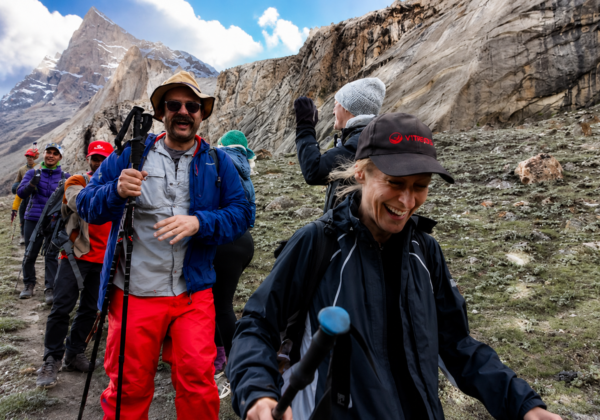
The Fairy Meadows–Beyal–Nanga Parbat Base Camp route is generally considered a non-technical trek.
You don’t need ropes, climbing equipment or mountaineering experience simply to hike the standard tourist trail.
However, “non-technical” does not mean effortless.
You’ll be hiking for several hours at elevations approaching 4,000 metres, sometimes over uneven mountain terrain.
Your experience will depend heavily on:
-
- Physical fitness
-
- Acclimatization
-
- Weather
-
- Trail conditions
-
- Backpack weight
-
- Hiking experience
For someone who regularly hikes, reaching the base-camp viewpoint can be a challenging but manageable day.
For someone who rarely exercises and has never walked at altitude, it can feel considerably more difficult.
What About Altitude Sickness?
Altitude deserves more respect than the steepness of the trail.
Fairy Meadows already sits around 3,300 metres, and the trek toward Nanga Parbat Base Camp takes you close to 4,000 metres.
Your body may therefore respond differently than it would during a similar hike at lower elevation.
Possible symptoms of altitude illness can include headache, nausea, dizziness, unusual fatigue and disturbed sleep.
Spending a night at Fairy Meadows before attempting the higher hike is a sensible approach.
Walk slowly, stay hydrated and don’t force yourself upward if you are feeling significantly unwell.
The mountain will still be there tomorrow.
Best Time to Visit Nanga Parbat Base Camp
For ordinary trekking trips, the main season runs through the warmer months when the Fairy Meadows access route is open.
June through September is generally considered the most reliable period for trekking around Fairy Meadows and Nanga Parbat.
June
June brings greener landscapes and the beginning of the main trekking season.
There may still be snow higher in the mountains, creating spectacular scenery.
July
July is one of the busiest periods.
Temperatures are relatively comfortable during the daytime, vegetation is green, and most tourist facilities are operating.
August
August remains a popular month, although weather systems can bring cloud, rainfall and an increased possibility of landslides on regional roads.
Keep your itinerary flexible.
September
September can be excellent.
There are generally fewer visitors than during peak summer, temperatures begin to cool and clear mountain views can be exceptional.
Nights become noticeably colder, however.
October
Some travelers visit during early October for autumn scenery and quieter trails.
Conditions become colder and less predictable, and tourism facilities gradually begin closing as winter approaches.
For most first-time international visitors, June to September is the safest planning window.
How Many Days Should You Allow?
If Nanga Parbat Base Camp is one of the main goals of your Pakistan trip, don’t rush it.
A good minimum itinerary is:
Day 1: Raikot Bridge to Fairy Meadows
Take the jeep toward Tattu Village and trek to Fairy Meadows.
Spend the afternoon relaxing and acclimatizing.
Stay overnight.
Day 2: Fairy Meadows to Nanga Parbat Base Camp
Start early.
Walk through the forest toward Beyal Camp before continuing toward the Nanga Parbat Base Camp viewpoint.
Return to Fairy Meadows.
Stay a second night.
Day 3: Fairy Meadows to Raikot Bridge
Trek back toward Tattu Village.
Take the jeep down to Raikot Bridge and continue toward your next destination.
This gives you two nights at Fairy Meadows.
Personally, I would avoid trying to make the itinerary shorter than this.
If you have extra time, adding another night gives you valuable flexibility if clouds or bad weather hide Nanga Parbat on your planned trekking day.
Should You Stay at Beyal Camp?
You don’t necessarily have to.
Many travelers hike from Fairy Meadows to Base Camp and return on the same day.
But staying around Beyal can create a completely different experience.
It is quieter and feels considerably more remote than Fairy Meadows.
You also position yourself closer to the mountain, which can make early-morning hiking and photography easier.
Travelers seeking comfort will probably prefer returning to Fairy Meadows.
Travelers seeking solitude may love Beyal.
Do You Need a Guide?
Trail difficulty alone doesn’t necessarily require professional mountaineering assistance, but international travelers should seriously consider using a reputable local guide for the base-camp section.
A local guide can help with:
route finding,
changing trail conditions,
weather decisions,
communication with local communities,
accommodation,
transport,
and emergencies.
Rules affecting international visitors can also change.
Recent local travel information describes the Fairy Meadows/Base Camp trek as an open trekking route rather than a restricted climbing expedition, but recommends checking current requirements close to departure.
Do not confuse trekking to the base camp with climbing Nanga Parbat.
Attempting the mountain itself is an entirely different activity requiring professional expedition planning, permits and serious high-altitude mountaineering experience.
Where to Stay
Most travelers use Fairy Meadows as their main base.
Accommodation primarily consists of:
-
- Wooden cottages
-
- Basic guesthouses
-
- Camping
-
- Simple mountain lodges
Expect relatively basic facilities compared with hotels in Islamabad, Lahore, Hunza or Skardu.
This is a remote mountain destination.
Hot water, electricity, internet and charging facilities can all be limited depending on the property and conditions.
The view is the luxury here.
Food and Water
Basic meals are available at many accommodations around Fairy Meadows.
Common options may include Pakistani dishes such as:
dal,
rice,
vegetables,
eggs,
paratha,
chicken,
tea,
and simple breakfasts.
Food naturally becomes more expensive the farther you travel from the main road because supplies have to be transported into the mountains.
Carry enough water for the Base Camp hike and ask your accommodation or guide about safe refill options.
A water purification method can also be useful for hikers spending several days in the area.
What to Pack for Nanga Parbat Base Camp
You don’t need expedition equipment for the standard trek, but good hiking gear will make the experience much more comfortable.
Essential Clothing
-
- Lightweight hiking trousers
-
- Moisture-wicking shirt
-
- Warm fleece
-
- Insulated jacket
-
- Waterproof or windproof outer layer
-
- Warm hat
-
- Sun hat or cap
-
- Hiking socks
Mountain temperatures can change quickly.
You might be walking in sunshine during the afternoon and wearing several layers after sunset.
Footwear
Wear proper hiking shoes or trekking boots with good grip.
Avoid attempting the higher trek in casual fashion shoes.
Your feet will remind you of that decision for the rest of the trip.
Hiking Equipment
Consider bringing:
-
- Small daypack
-
- Trekking poles
-
- Reusable water bottle
-
- Sunglasses
-
- High-SPF sunscreen
-
- Headlamp
-
- Power bank
-
- Basic first-aid kit
-
- Rain cover
-
- Snacks
-
- Offline map
-
- Camera
Carry Cash
Carry sufficient Pakistani rupees before traveling into the mountains.
Do not rely on finding an ATM at Fairy Meadows or near the Base Camp trail.
Internet and Mobile Signal
Internet connectivity in this region should be considered a bonus rather than something guaranteed.
Mobile signal can be limited, and reliable high-speed internet should not be expected once you travel toward Fairy Meadows.
Before leaving a larger town, download:
-
- Offline maps
-
- Accommodation details
-
- Passport copies
-
- Travel documents
-
- Emergency contacts
-
- Transport information
Tell someone your trekking plans as well.
Photography at Nanga Parbat Base Camp
This trek is exceptional for landscape photography.
The changing environments give you several completely different photographic perspectives.
At Fairy Meadows, you can photograph Nanga Parbat above green meadows and pine forest.
Around Beyal, the mountain begins to dominate the landscape.
Closer to Base Camp, the environment becomes much more dramatic, with glaciers, moraine and exposed mountain terrain filling the foreground.
For photographers, early morning can be particularly rewarding because mountains are often clearer before afternoon clouds develop.
Bring spare batteries or a power bank.
Cold temperatures can drain batteries faster than expected.
Is Nanga Parbat Base Camp Safe?
Thousands of visitors travel to Fairy Meadows and hike toward Nanga Parbat each season, but this remains genuine mountain terrain.
The biggest practical risks for ordinary trekkers include:
-
- Altitude
-
- Sudden weather changes
-
- Slipping on rough terrain
-
- Exhaustion
-
- Landslides affecting access roads
-
- Getting caught out after dark
Check weather and road conditions before departing.
The Gilgit-Baltistan Tourism Department has specifically warned travelers to remain cautious during severe rainfall because mountain roads can be affected by landslides, flash floods and related hazards.
Follow local advice.
If your guide tells you conditions aren’t suitable for continuing higher, listen.
A Base Camp photograph is never worth taking unnecessary risks.
Fairy Meadows or Nanga Parbat Base Camp: Which Should You Visit?
Ideally?
Both.
Fairy Meadows is easier, greener and more relaxing.
Nanga Parbat Base Camp is wilder, quieter and considerably more adventurous.
If your Pakistan trip is primarily about sightseeing and you don’t enjoy long hikes, staying at Fairy Meadows may be enough.
But if you’re physically capable of hiking several hours and enjoy mountain landscapes, continuing toward Beyal Camp and Nanga Parbat Base Camp adds another dimension to the experience.
Fairy Meadows lets you see the mountain.
Base Camp lets you feel how enormous it really is.
Can Beginners Trek to Nanga Parbat Base Camp?
Yes — with some preparation.
You don’t need technical climbing experience.
But you should be comfortable walking uphill and downhill for several hours.
Before traveling to Pakistan, regular walking, hiking, stair climbing or cardio training will make the experience considerably more enjoyable.
Beginners should also consider hiking with a local guide and avoid trying to maintain the pace of more experienced trekkers.
There is no prize for arriving first.
Is Nanga Parbat Base Camp Worth It?
For travelers who love mountains, absolutely.
Pakistan has some of the greatest mountain scenery on Earth, but much of it takes considerable effort to reach.
The Nanga Parbat Base Camp trek offers an unusual balance.
It feels genuinely remote and adventurous without requiring weeks of expedition trekking.
You experience:
the Karakoram Highway,
the famous Fairy Meadows jeep road,
a mountain village,
Fairy Meadows,
Himalayan forests,
Beyal Camp,
glacial landscapes,
and finally one of the world’s highest mountains towering directly above you.
That is a remarkable amount of adventure packed into only a few days.
Frequently Asked Questions
How high is Nanga Parbat?
Nanga Parbat stands at 8,126 metres (26,660 feet) and is the ninth-highest mountain in the world.
How high is Nanga Parbat Base Camp?
The commonly visited Raikot-side Base Camp/viewpoint is generally described as being around 3,900 metres above sea level, though exact elevations vary according to the stopping point being referenced.
How long does it take to trek from Fairy Meadows to Nanga Parbat Base Camp?
Allow roughly 6–8 hours for the return hike from Fairy Meadows if you continue all the way to the commonly visited Base Camp/viewpoint area. Hiking times vary significantly with fitness, altitude and trail conditions.
Do you need mountaineering experience?
No.
The standard Fairy Meadows to Nanga Parbat Base Camp trek is a hiking route rather than a technical climb.
What is the best time to trek to Nanga Parbat Base Camp?
For most travelers, June through September offers the most practical combination of access and trekking conditions.
Can you visit Fairy Meadows without trekking to Base Camp?
Yes.
Many visitors simply stay at Fairy Meadows and enjoy the views of Nanga Parbat.
Can you reach Nanga Parbat Base Camp by car?
No.
Vehicles only take you part of the way.
The final journey requires hiking via Fairy Meadows and Beyal Camp.
Final Thoughts
There are places where you go to take photographs.
And then there are places where simply standing there becomes the memory.
Nanga Parbat Base Camp is one of those places.
The journey is not effortless.
You’ll travel along remote mountain roads, climb toward Fairy Meadows, sleep at more than 3,000 metres and spend hours hiking deeper into the mountains.
But eventually the forest disappears behind you.
The landscape opens.
The glaciers become visible.
And Nanga Parbat rises above you — more than eight kilometres high and occupying what feels like half the sky.
For foreign travelers searching for adventure in Pakistan, the Fairy Meadows to Nanga Parbat Base Camp trek is one of the country’s unforgettable mountain experiences.
Take your time.
Respect the altitude.
Listen to the mountains.
And don’t forget to occasionally put the camera away and simply look up.