Turquoise lakes squeezed between enormous mountains, centuries-old forts overlooking traditional villages, glaciers beside the highway, apricot orchards, and some of the most recognizable peaks in Pakistan — Hunza Valley packs an extraordinary amount into one destination.
Located in Gilgit-Baltistan in northern Pakistan, Hunza has become one of the country’s most popular destinations for international travelers. It is particularly appealing to first-time visitors because you can experience spectacular Karakoram scenery without undertaking a multi-day expedition.
You can wake up beneath snow-covered mountains, explore an ancient fort in the morning, have lunch beside a turquoise lake, drive along the legendary Karakoram Highway, and watch sunset over some of the highest peaks in the region.
Pakistan’s Gilgit-Baltistan Tourism Department describes Hunza as one of the region’s prime tourist attractions and highlights places including Baltit Fort, Altit Fort, Attabad Lake, Duikar, Passu and Gulmit.
This Hunza Valley Pakistan travel guide covers the best places to visit, things to do, how to reach Hunza, the best time to travel, where to stay, how many days you need, and practical tips specifically useful for foreign tourists visiting northern Pakistan.
Where Is Hunza Valley?
Hunza Valley lies in the mountainous Gilgit-Baltistan region of northern Pakistan, along the Karakoram Highway leading toward the Pakistan-China border.
One thing that confuses first-time visitors is that Hunza is not simply one town.
The wider Hunza region contains several towns and villages spread along the valley. Karimabad is the main historical and tourist center, while places such as Gulmit, Passu and Sost lie farther north in Upper Hunza, also known as Gojal.
The regional tourism authority describes Hunza as a former princely state covering approximately 11,695 square kilometres and notes that Burushaski, Shina and Wakhi are spoken locally, while Urdu and English are also widely used.
For a first visit, it helps to think of your trip in two parts:
Central Hunza — Karimabad, Altit, Baltit and Duikar.
Upper Hunza — Attabad Lake, Gulmit, Passu, Borith Lake, Sost and Khunjerab Pass.
Exploring both gives you a much better understanding of the valley than staying only in Karimabad.
Why Visit Hunza Valley?
Hunza works particularly well for international travelers because it combines dramatic scenery with relatively easy road access.
Unlike destinations that require several days of trekking, most major attractions in Hunza can be reached by vehicle, followed by short walks.
The scenery constantly changes as you travel north. Terraced villages and fruit orchards give way to turquoise lakes, glaciers, dry mountain landscapes and the sharp peaks of the Karakoram.
But Hunza isn’t only about mountains.
The valley also has an important cultural heritage. Historical forts, traditional settlements, local languages, music, food and agricultural traditions make it considerably more interesting than a destination based purely on scenery.
That combination of nature, culture, road trips, history and light adventure is what makes Hunza one of the strongest destinations to include in a first trip to Pakistan.
Best Places to Visit in Hunza Valley
1. Karimabad
For most foreign travelers, Karimabad is the best place to begin exploring Hunza Valley.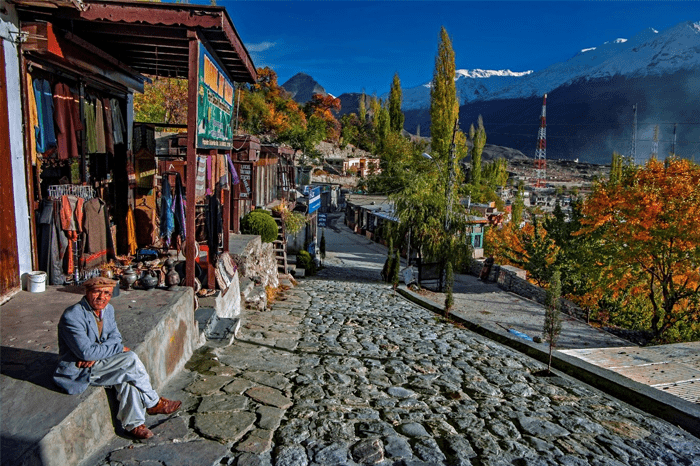
Formerly known as Baltit, Karimabad is the historic center of Hunza and sits beneath towering mountains with views across the valley. The Gilgit-Baltistan Tourism Department highlights the town for its cultural heritage, mountain scenery and proximity to Baltit Fort.
The center is compact enough to explore on foot, although the steep streets can quickly remind you that you are at altitude.
Spend time walking through the bazaar rather than moving immediately from one attraction to another. You will find cafés, restaurants, handicraft stores, dry-fruit shops and small businesses selling locally produced items.
Karimabad also makes an excellent base for your first two or three nights in Hunza.
2. Baltit Fort
Above Karimabad stands one of Hunza’s most recognizable landmarks: Baltit Fort.
The fort served as the historic residence of Hunza’s ruling family and today functions as an important heritage attraction. The Gilgit-Baltistan Tourism Department notes that it was used by Hunza’s royal family for centuries and was later restored with support from the Aga Khan Trust for Culture.
The building alone is worth visiting, but the location makes it even better.
From the fort and surrounding terraces, you can look across Karimabad toward mountains, villages and the Hunza Valley below.
Allow yourself time to walk uphill rather than treating it as a quick photo stop.
3. Altit Fort
A short distance away, Altit Fort offers another window into Hunza’s history.
The regional tourism department describes Altit as a centuries-old fort positioned above the Hunza River and one of the valley’s significant surviving heritage sites.
The surrounding old village is part of the experience.
Stone pathways, traditional buildings and cultivated terraces make Altit feel different from central Karimabad, even though the two are close together.
If you enjoy architecture and local history, visit both Baltit and Altit rather than choosing between them.
4. Duikar and Eagle’s Nest
For panoramic mountain views, travel above Karimabad toward Duikar, often associated with the Eagle’s Nest viewpoint.
This is particularly popular around sunrise and sunset.
From the higher slopes, you can look across a huge section of the valley while major peaks rise around you. The official Hunza tourism guide specifically recommends Duikar for sunrise, sunset and night-sky views.
If you only have one sunset in Central Hunza, this is where I would spend it.
Arrive before the light begins changing rather than reaching the viewpoint at the exact moment of sunset.
5. Attabad Lake
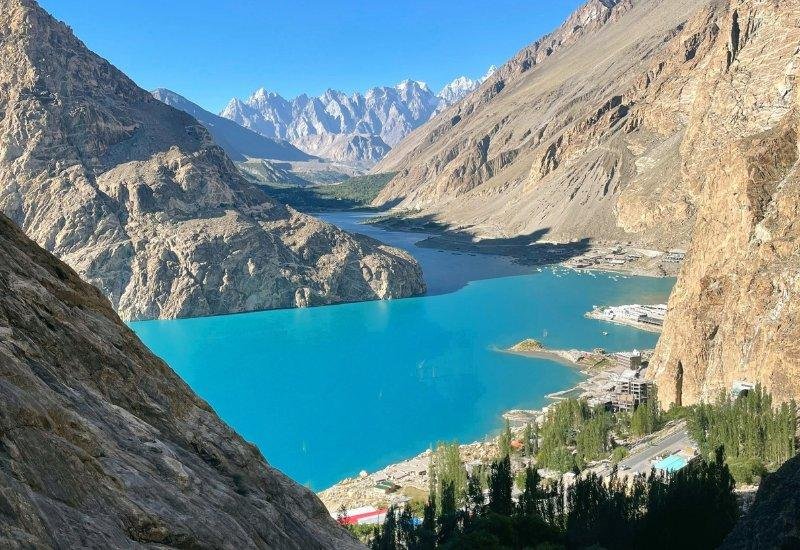
Drive north from Karimabad and the landscape changes dramatically when you reach Attabad Lake.
The brilliant turquoise lake formed after a massive landslide blocked the Hunza River in January 2010. Today it has become one of the most visited attractions in Gilgit-Baltistan, with boating and other recreational activities available around the lake.
The contrast is extraordinary.
Bright blue water sits between steep, almost barren mountains while the Karakoram Highway passes through tunnels beside the lake.
You can simply stop for the views, but taking a boat trip gives you a better sense of the lake’s scale.
Attabad is easy to combine with Gulmit and Passu as part of an Upper Hunza day trip.
6. Gulmit
Continue north and you reach Gulmit, one of Upper Hunza’s most attractive settlements.
It is quieter than Karimabad and makes a good alternative base for travelers who prefer traditional villages and a slower atmosphere.
The surrounding landscape is impressive, but Gulmit’s appeal also comes from everyday village life, traditional architecture, agriculture and Wakhi culture.
Instead of rushing through on your way to Passu, spend some time walking around.
Hunza becomes much more interesting when you stop treating every village as a photo stop.
7. Passu Cones
Few landscapes in northern Pakistan are as instantly recognizable as the Passu Cones.
These dramatic pointed mountains rise directly above the Karakoram Highway near Passu village, creating one of the most photographed road scenes in Pakistan.
You will see the peaks from several locations as you approach Passu, so don’t worry about finding one exact Instagram viewpoint.
The best experience is simply driving slowly through the area and stopping safely wherever appropriate.
Morning and late-afternoon light can make the ridges particularly dramatic.
8. Passu Glacier
Passu isn’t only about the cones.
The nearby Passu Glacier provides a completely different perspective on the Karakoram landscape. The Gilgit-Baltistan Tourism Department confirms that the glacier lies near Passu village and is connected with the broader glacier systems of the Batura Muztagh range.
Several viewpoints and hiking possibilities exist around the region.
Conditions around glaciers can change, however, so avoid improvising routes across unstable terrain. If you want to trek closer to a glacier, use current local advice or an experienced guide.
9. Borith Lake
Travelers who have more time should consider Borith Lake, located near Ghulkin and Passu in Upper Hunza.
The lake sits at roughly 2,600 metres and is particularly interesting for birdlife. According to the regional tourism authority, migrating waterfowl can be seen during parts of spring and again during autumn migration.
Borith feels peaceful compared with some of Hunza’s more famous stops.
It is a good place to slow down, walk, photograph the landscape and enjoy an area many short tours rush past.
10. Hussaini Suspension Bridge
Near Hussaini village is one of Hunza’s most famous adventure attractions: the Hussaini Suspension Bridge.
The long wooden footbridge crosses above the river against a dramatic mountain backdrop.
It has become extremely popular with travelers and photographers, but remember that it is still a suspension bridge rather than an amusement-park attraction.
Walk carefully, follow local instructions and don’t create unnecessary risk for the sake of photographs.
If heights make you uncomfortable, watching from the side is perfectly acceptable.
11. Sost
Sost is the main town before the road climbs toward Khunjerab Pass and the Chinese border.
You probably won’t need an entire sightseeing day here, but it is an interesting final settlement on the Karakoram Highway before entering much higher mountain terrain.
Travelers heading to Khunjerab commonly stop here for food, fuel or supplies.
The landscape beyond Sost becomes increasingly remote.
12. Khunjerab Pass
If road and weather conditions allow, Khunjerab Pass makes an unforgettable final destination for an Upper Hunza road trip.
Located near the Pakistan-China border, the pass reaches approximately 4,693 metres (15,397 feet) above sea level and is one of the world’s highest international border crossings. The tourism department notes that winter weather can close access to the pass.
The altitude is significant.
Even if Karimabad feels comfortable, Khunjerab is almost two kilometres higher.
Walk slowly, avoid strenuous activity immediately after arrival and pay attention to headaches, dizziness or unusual shortness of breath.
The journey is as memorable as the border itself. The road passes through increasingly empty high-altitude landscapes before eventually reaching the famous Pakistan-China gateway.
Best Things to Do in Hunza Valley
Hunza isn’t a destination where you need to fill every hour with formal attractions.
One of the best things to do is simply road-trip along the Karakoram Highway. The road connects Central and Upper Hunza and passes many of the valley’s most impressive landscapes.
Spend another day exploring Hunza’s cultural side. Visit Baltit and Altit forts, walk through the older settlements, talk to local people, try regional dishes and browse locally produced handicrafts.
For outdoor travelers, short hikes around Passu, Gulmit and the surrounding valleys can add another dimension to the trip.
Attabad Lake offers boating and other water-based recreational activities, which the regional tourism department lists among the area’s popular tourist activities.
Photography is another reason many people visit. Hunza changes dramatically with the seasons, and the combination of villages, peaks, rivers, glaciers and orchards creates excellent landscape and street-photography opportunities.
And finally, make time to do absolutely nothing.
Sit somewhere with a cup of chai, look at the mountains and allow yourself to actually experience Hunza instead of constantly trying to complete a checklist.
Best Time to Visit Hunza Valley
For most foreign travelers, the broad tourism season runs from spring through autumn. Pakistan’s Ministry of Foreign Affairs describes April to October as the main tourism period for Gilgit-Baltistan, while Pakistan’s National Tourism Portal highlights Hunza as a particularly attractive northern destination during the warmer months.
Spring: April to May
Spring is ideal if you want to see Hunza’s famous fruit trees in blossom.
Pink and white flowers appear across villages and terraces while the mountains remain heavily snow-covered.
Blossom timing changes each year depending on temperatures, so anyone traveling specifically for photography should keep some flexibility.
April is also promoted by Pakistan’s National Tourism Portal as a good period for visiting Hunza as northern valleys begin becoming more accessible.
Summer: June to August
Summer brings warmer temperatures, greener landscapes and easier access to many higher areas.
It is one of the most practical times for first-time international travelers because most major tourist services are operating.
It is also peak domestic tourism season, so popular locations and accommodations can become busy.
Book important stays ahead of time, especially if your dates fall around holidays.
Autumn: September to October
Autumn completely changes the appearance of Hunza.
Trees across the valley become yellow, orange and red while snow-covered mountains remain in the background.
For landscape photographers, autumn is arguably just as appealing as blossom season.
Temperatures become cooler, particularly at night, so bring proper layers.
Winter: November to March
Hunza does not disappear in winter, but travel becomes more complicated.
Snow, ice and cold weather affect higher areas, and destinations such as Khunjerab Pass may be inaccessible.
Winter can be beautiful for travelers who specifically want snow and quiet landscapes, but it is not the easiest season for a first trip.
If this is your first time visiting Pakistan, spring, summer or early autumn will generally give you more flexibility.
How to Reach Hunza Valley
There is no commercial airport directly in Hunza, so international visitors normally arrive by road or fly to Gilgit and continue by vehicle.
Islamabad to Hunza by Air
The fastest approach is normally to fly from Islamabad to Gilgit and continue north by road.
From Gilgit, Karimabad is roughly 100 kilometres away and usually requires around two to three hours of driving depending on road and traffic conditions.
Flights into Gilgit are weather-dependent.
Do not schedule your return from Gilgit immediately before an international flight home. Leave enough flexibility for delays or cancellations.
Islamabad to Hunza by Road
The alternative is the famous overland journey along the Karakoram Highway.
This takes considerably longer, but the journey itself becomes part of your Pakistan experience.
Most travelers divide the drive rather than attempting the entire journey continuously. Depending on season and road conditions, routes may pass through Besham and Chilas or use the seasonal Babusar Pass route before joining the Karakoram Highway farther north.
Road conditions in northern Pakistan can change because of weather, landslides, construction and other mountain hazards.
Check current conditions shortly before departure rather than relying on travel times published months earlier.
Getting Around Hunza
Having a vehicle makes exploring Hunza significantly easier.
Karimabad itself is walkable, although many streets are steep. To explore Attabad, Gulmit, Passu, Borith and Khunjerab efficiently, you will normally want a private vehicle, hired driver or organized day trip.
Foreign visitors who are uncomfortable driving mountain roads should consider hiring a local driver.
They understand road conditions, checkpoints and appropriate stopping places, and you can concentrate on the scenery instead of navigating unfamiliar roads.
Where to Stay in Hunza
For first-time visitors, Karimabad is usually the easiest base.
It gives you convenient access to restaurants, Baltit Fort, Altit, shops and viewpoints while offering accommodation across several price ranges.
Travelers with enough time should consider splitting their stay between Central Hunza and Upper Hunza.
For example, spend two or three nights in Karimabad and another one or two nights around Gulmit or Passu.
This reduces repeated driving and allows you to experience Upper Hunza after day-trippers have returned south.
How Many Days Do You Need in Hunza Valley?
Three days is possible, but it will feel rushed.
For a first international visit, four to five days is a much more comfortable amount of time.
Spend your first day exploring Karimabad, Baltit Fort and the surrounding town. Use another day for Altit and Duikar. Then dedicate a full day to Attabad Lake, Gulmit and Passu.
With another day, continue toward Borith Lake, Hussaini and nearby villages. If Khunjerab Pass is open and high on your priority list, dedicate a separate long day to the journey rather than trying to squeeze it between several other attractions.
Travelers who enjoy photography, hiking and slow travel could easily spend a week in the wider Hunza region.
What to Eat in Hunza
Food is one of the easiest ways to experience the valley beyond its scenery.
Hunza is particularly famous for locally grown apricots, apples, cherries, mulberries and grapes, according to the regional tourism department.
Look beyond generic restaurant menus and try regional dishes when available.
Ask your guesthouse or local host what is seasonal rather than searching only for dishes recommended on social media.
Fresh and dried apricots are especially closely associated with Hunza, and you’ll find apricot products sold throughout the region.
Tea is everywhere.
You will probably drink more of it than you planned.
What to Pack for Hunza Valley
Mountain weather can change quickly, and conditions at Khunjerab can be dramatically colder than in Karimabad on the same day. Pack for layers rather than assuming the entire valley will have one temperature.
- Comfortable walking or hiking shoes
- Lightweight shirts and trousers
- Warm fleece or sweater
- Insulated jacket
- Waterproof or windproof outer layer
- Sunglasses
- High-SPF sunscreen
- Hat or cap
- Reusable water bottle
- Small daypack
- Power bank
- Basic medication and first-aid supplies
- Camera and spare battery
- Offline maps
- Copies of important travel documents
- Enough Pakistani rupees for areas where card payments are unavailable
Dress practically and relatively modestly when visiting villages and cultural sites.
You don’t need special clothing to travel around Hunza, but respectful dress makes interaction with local communities easier and more comfortable.
Money, ATMs and Internet
Carry some cash.
Larger settlements have banking facilities, but you should not assume that every restaurant, guesthouse or small business accepts international cards.
Withdraw enough Pakistani rupees when you have access to a reliable ATM, particularly before traveling farther into Upper Hunza.
Mobile internet is available in parts of the valley but may be slower or less reliable in remote areas.
Download maps, hotel information and important documents before leaving larger towns.
Think of good connectivity as useful when available rather than guaranteed everywhere.
Safety Tips for Foreign Travelers
Hunza receives both Pakistani and international tourists, and the main tourist areas are accustomed to visitors.
However, the bigger practical risks are often related to mountain travel rather than urban crime.
Weather can affect roads unexpectedly. Landslides, rockfall, snow and flooding may occasionally interrupt routes, so check conditions before longer journeys.
The Pakistan Meteorological Department publishes dedicated weather information for tourist destinations including Hunza and may issue warnings about rain and landslide risks in northern areas.
Avoid forcing a schedule when conditions are poor.
Carry your passport or appropriate identification while traveling, keep digital copies of important documents, and follow instructions at checkpoints.
At high-altitude destinations such as Khunjerab Pass, take altitude seriously. If you develop significant symptoms, descending is more important than completing your sightseeing plan.
Foreign travelers should also check their own government’s current travel advice before visiting Pakistan because official advisories can change independently of conditions within Hunza itself.
Is Hunza Valley Expensive?
Hunza can work for several different travel budgets.
Budget guesthouses and local transport can keep costs relatively low, while private drivers, high-end accommodation and organized tours can increase expenses substantially.
For foreign travelers, transport is usually one of the biggest expenses because many attractions are spread across a long valley.
Traveling with another person or a small group can reduce the per-person cost of private transport.
Avoid building your budget around exact prices found in older blog posts. Fuel, accommodation and transport prices change, particularly during peak tourism periods.
Is Hunza Worth Visiting?
Yes — especially for a first trip to northern Pakistan.
Few destinations offer such an accessible introduction to the Karakoram.
Within a relatively compact region you can explore historical forts, traditional villages, turquoise lakes, glaciers, high mountain passes and one of the world’s most spectacular road corridors.
Hunza can also be as adventurous or as comfortable as you choose.
You can spend your days hiking and exploring remote valleys, or stay in Karimabad and make relatively easy sightseeing trips by vehicle.
That flexibility makes Hunza Valley one of the best destinations in Pakistan for foreign tourists.
Suggested 5-Day Hunza Valley Itinerary
A comfortable five-day trip begins with Karimabad, Baltit Fort and the local bazaar on Day 1, followed by Altit Fort and sunset at Duikar on Day 2.
Use Day 3 to drive through Attabad Lake and Gulmit before continuing to Passu. Spend enough time outside the vehicle rather than treating the day as a sequence of photo stops.
On Day 4, explore Passu, Borith Lake, Hussaini and nearby areas of Upper Hunza.
Use Day 5 for Khunjerab Pass if it is open and conditions are suitable. If not, use the day for a slower village experience or additional hiking around Upper Hunza.
This itinerary is intentionally flexible.
In northern Pakistan, flexibility isn’t wasted time. It is part of traveling responsibly in mountain environments.
Frequently Asked Questions About Hunza Valley
Where is Hunza Valley in Pakistan?
Hunza Valley is located in Gilgit-Baltistan in northern Pakistan, along the Karakoram Highway north of Gilgit.
What is Hunza Valley famous for?
Hunza is famous for its Karakoram mountain scenery, historic Baltit and Altit forts, Attabad Lake, Passu Cones, glaciers, fruit orchards and the road toward Khunjerab Pass.
What is the best month to visit Hunza Valley?
There isn’t one perfect month for everyone. Visit around April for blossoms, June to August for warmer weather and outdoor activities, or September to October for autumn colors.
How many days are enough for Hunza?
Allow at least three days, but four to five days is considerably better for a first visit. A week is ideal if you want slower travel, hiking and more time in Upper Hunza.
Is Hunza safe for foreign tourists?
Hunza is an established tourism destination, but visitors should still check current official travel advice, weather and road conditions. Mountain travel, altitude and changing road conditions deserve particular attention.
Can you travel to Hunza without a tour?
Independent travel is possible, and Karimabad is relatively straightforward to navigate. Hiring a local driver can make exploring Upper Hunza considerably easier, especially for first-time visitors.
Is there an airport in Hunza?
No commercial airport directly serves Hunza. Most travelers who fly use Gilgit Airport and then continue to Hunza by road.
Can you see snow in Hunza?
Snow remains visible on surrounding high mountains for much of the year. Snow at village level depends on season and elevation, with winter offering the greatest possibility.
Can you visit Attabad Lake and Passu on the same day?
Yes. Attabad Lake, Gulmit and Passu lie along the same general route through Upper Hunza and work well as a combined day trip from Central Hunza.
Is Khunjerab Pass worth visiting?
Yes, particularly if you enjoy road trips and high-altitude landscapes. However, at 4,693 metres the altitude is significant, and access depends on weather and seasonal road conditions.
Final Thoughts
Some destinations have one famous attraction.
Hunza feels like the attraction changes every hour.
One moment you are walking beneath a centuries-old fort in Karimabad. A few hours later you are standing beside the turquoise water of Attabad Lake.
Continue north and the sharp Passu Cones appear above the highway.
Keep driving and eventually the road climbs toward nearly 4,700 metres at the Pakistan-China border.
But the best memories from Hunza Valley, Pakistan may not come from any of those famous places.
They may come from drinking tea in a quiet village, walking through an orchard, talking with someone you met five minutes earlier, or watching the final sunlight disappear from the mountains above Karimabad.
For foreign travelers planning their first journey through northern Pakistan, Hunza offers an excellent introduction to what makes the region extraordinary.
Give it enough time.
Don’t rush from viewpoint to viewpoint.
And remember that in Hunza, the road between the famous places is often just as beautiful as the destination.